- FSN Mag
- Kids Bedrooms
- When a kid is ready for a loft bed and how to choose one
When a kid is ready for a loft bed and how to choose one
A kids loft bed frees up floor space in a small bedroom, but parents must check ceiling heights and strict safety rules before setting one up.
Written for you by Yvonne Fairbanks
7 quiet minutes to read
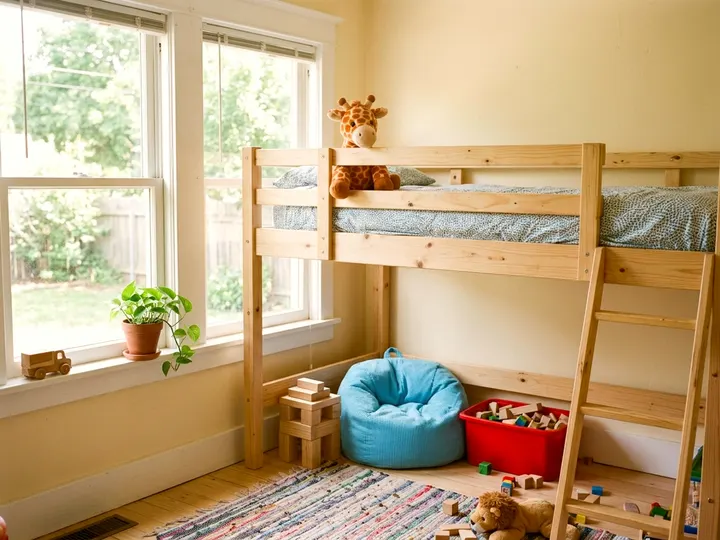
A kids loft bed saves valuable floor space, but the height means your child must climb safely in the dark. Wait until your kid can handle stairs at night without your help. You also need to measure your ceiling clearance before you shop.
Decide if your kid is ready for a bed off the floor
Your child needs good balance and nighttime awareness for a high bed. Kids reach this stage at different ages, so check the bed maker's age guidance. Younger children may forget where they are when they wake up from a deep sleep.
Think about your child's usual night. A kid who frequently sleepwalks or wakes up confused should stay near the floor. You also want a child who can climb down the ladder alone to use the bathroom. A middle-of-the-night potty trip is hard enough without waiting for a parent to help.
Watch how your child handles their current sleeping arrangement. A kid who still rolls out of a standard twin bed might need another year before moving up. Give them time to build body awareness.
Siblings complicate the decision. A toddler will absolutely try to follow an older brother or sister up the ladder. If your youngest child shares the room, you must enforce strict rules about who gets to climb. You might need to remove the ladder during the day until the younger sibling understands the boundaries.
Match the bed height to your ceiling
Ceiling height dictates how tall the bed can be. If you buy a tall loft for a standard room, your kid might hit their head sitting up in bed. Grab a measuring tape before you look at beds.
You want enough room for your child to sit up comfortably on the mattress. Leave plenty of breathing room between the ceiling and the bed.
Look up before you decide where the bed will go in the room. Ceiling fans are a hazard for a kid on a top bunk. You must place a tall bed far out of reach of any spinning fan blades.
Check the ceiling for heating and cooling vents as well. You do not want the air conditioning blowing directly on your sleeping child all night.
If your ceilings are low, look at mid-height or low loft beds. These frames lift the mattress just a short distance off the floor. They suit younger kids. The space underneath is just right for crawling in to play with stuffed animals.
Check the guardrails and the ladder
Safety rules change once a bed leaves the ground, and a loft bed with a high mattress is worth checking against the bunk bed rules. The CPSC bunk bed rules define a bunk bed by a mattress foundation more than 30 inches above the floor and require at least two upper bunk guardrails, one on each side.
These same CPSC rules require the tops of the upper bunk guardrails to sit at least 5 inches above the top of the mattress. Pay close attention to mattress thickness when you set up the room. A thick pillow-top mattress can swallow up that guardrail space. Use a mattress no thicker than the bed maker recommends to keep that safety barrier intact.
You can read more about keeping tall beds safe before you shop. Wooden and metal frames shift over time.
Make it a habit to check the ladder and rails every month. Grab the guardrails and give them a shake. If anything rattles, grab your Allen wrench and tighten the bolts.
Check the ladder style carefully. Straight ladders save floor space but are harder to climb. Angled ladders take up more room but offer an easier trip down in the dark.
Make sure the steps are wide and flat. Bare feet slip easily on round metal rungs.
Many modern loft beds swap the traditional ladder for a wooden staircase. A set of stairs can be easier for a sleepy kid. These steps often feature built-in drawers, which gives you extra storage for pajamas and socks. Stairs require more floor space, so measure your room before choosing this option.
Plan for sheet changes and nighttime drinks
Making a loft bed is a physical chore. You have to balance on the mattress and tuck fitted sheets into tight corners. Look for a mattress that is light enough for you to lift with one hand.
Some parents use a sleeping bag or a zip-up bedding set to avoid traditional blankets entirely. A simple comforter is much easier to manage than flat sheets that need to be tucked in on all sides.
Think about your child's evening routine. A kid in a high bed cannot easily reach a standard nightstand. You will need a shelf or a hanging fabric caddy that attaches to the top rail. This gives your child a safe spot to keep a water bottle or a flashlight.
A small clip-on reading light is another useful addition. It avoids a lamp cord dangling down the side of the bed. Your kid can turn it off without climbing down.
Use the space underneath without crowding the bed
The main reason to buy a loft bed is the empty space it creates. A small bedroom feels bigger when the bed sits high up. You can set up a desk or a row of toy bins. This is one of the easiest ways to free up room for a train set or dollhouse.
Do not pack the lower area too tight. Kids need room to pull out a chair or open a drawer. If you shove a large desk and a heavy bookcase under a low loft, the space turns into a dark cave. Leave some open floor so your child actually wants to play there.
Put a soft rug under the loft to define the space. A plush rug gives kids a comfortable spot to sit while they color or build blocks. It also softens the noise of heavy toys hitting the floor.
The area under a tall bed blocks the main overhead ceiling light. Add safe lighting so your kid can see what they are doing. String lights or a simple battery-powered push light work well. Avoid floor lamps that easily tip over during a game of indoor tag.
Make sure you secure any tall furniture that sits near the bed. An active kid might try to step on a bookcase to reach the mattress. You can find simple ways to bolt tall items to the wall so nothing tips over.
Set the house rules for climbing and sleepovers
A new loft bed feels like a playground. You must set boundaries on day one. Kids will want to jump off the ladder or pull their friends up. A firm rule against roughhousing helps lower the risk of an injury.
Make it clear that the ladder is the only way up and down. Kids should never use a desk chair or a nearby dresser as a step stool. Tell them the bed is for sleeping and quiet reading.
Sleepovers require their own rules. Most loft beds are meant for one sleeper, so check the maker's limits. Two kids shifting around on a high mattress can push the limits of the frame. Offer guests a sleeping bag on the floor instead.
You also need a plan for sick days. A kid with a stomach bug has no business sleeping on a top bunk. When your child feels dizzy or nauseous, make a temporary bed on the floor or the couch. Trying to carry a sick, heavy child down a straight ladder is dangerous for both of you.
Know when to move back to a regular bed
Loft beds rarely last through high school. Your child will eventually outgrow the ladder and the low ceiling clearance. Teenagers often want a standard bed that looks like adult furniture.
Watch how your kid uses the room. If they stop climbing up and prefer sleeping on the couch, the loft bed has run its course. A heavy growth spurt might also make the bed uncomfortable. Once your kid gets taller, sitting up near the ceiling becomes a daily hassle.
Plan to sell or donate the frame when that day comes. A well-kept wood or metal loft often finds a second life. Then you can bring in a standard twin or full mattress that fits your older child.