- FSN Mag
- Kids Bedrooms
- What to check before you buy bunk beds for kids
What to check before you buy bunk beds for kids
Find safe and sturdy bunk beds for kids with this plain buying guide based on federal safety rules for guardrails, gaps, and age limits.
Written for you by Yvonne Fairbanks
6 quiet minutes to read
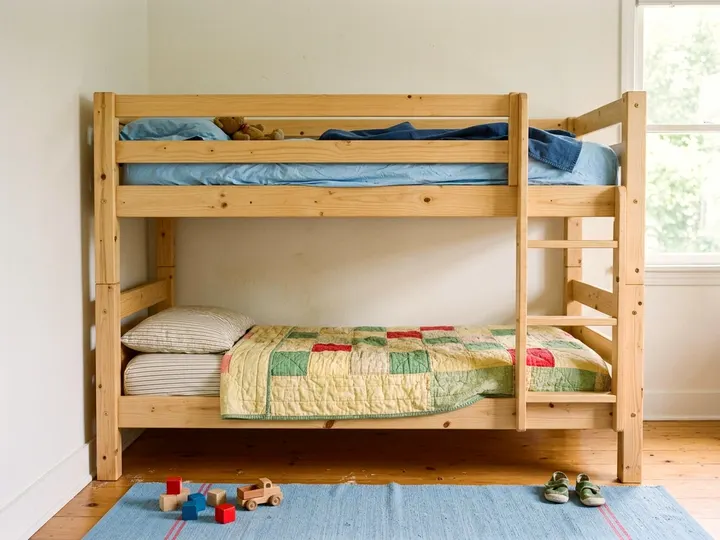
Safe bunk beds for kids follow strict federal rules for guardrail heights, gap sizes and age limits. You want a sturdy frame that keeps a sleeping child from rolling out or getting stuck. A clear safety check before you buy makes sharing a bedroom much easier.
Age limits for the top bunk
Federal rules require bunk bed labels that warn not to place children under 6 on the upper bunk. The warning is there to protect younger kids from falls and injury on the upper bunk.
If your youngest child is a toddler, keep them on the bottom bed. You can review what a toddler bedroom needs after the crib for ideas on safe floor beds. Wait until their sixth birthday before you let them sleep on the top bunk.
The federal safety standard requires a label with this age warning. Parents sometimes wonder if a mature five-year-old is ready. The label warns by age, not by how mature a child seems. Keep younger kids on the ground level.
Guardrails on both sides of the bed
The top bunk poses a clear fall risk. Upper bunks need at least two guardrails, with at least one on each side. These rails form a solid barrier while your child sleeps. A child can roll against the rail during a bad dream, so it must be strong enough to hold them safely inside.
The height of these guardrails is heavily regulated. Guardrail tops must be no less than 5 inches above the top of the mattress. You have to measure this gap from the top of the mattress, not the bare wooden slats. A rail that sits too low offers no real protection.
A continuous wall side rail
Parents often assume the bedroom wall acts as a safe barrier, but a bed can sit a little away from the wall, leaving a gap where a child could fall. The federal rules cover this hazard. The wall side rail must run end to end.
This continuous rail on the back leaves no large gaps at the head or foot. It provides a solid barrier even if the frame moves on a slick floor. Check the back rail specifically when you shop. You want a bed that follows the federal guidelines for continuous rails.
Gaps and openings where a child can get stuck
Guardrails and ladders create spaces that a child might try to slip through. Openings in the upper bunk structure must be small enough, less than 3.5 inches, to prevent a child's torso from passing through. This stops a child from sliding their body out and getting caught by their head.
Take a tape measure with you if you look at beds in a store. Measure the empty space between the bottom of the guardrail and the bed frame, and check the gaps between the vertical rungs. Openings in the upper bunk structure should measure less than 3.5 inches, so skip a bed that fails this check.
When the lower bunk needs guardrails
The bottom bunk sits closer to the floor and carries different rules. Lower bunks with a mattress foundation 30 inches or less from the floor do not need guardrails. A fall from a low height is less dangerous than a fall from the ceiling.
If the bottom bunk sits higher than 30 inches, look for guardrails on it too. There are also distinct rules for the ends of the bottom bed. Openings in a lower bunk headboard or footboard that pass a rigid 9-inch sphere trigger a neck entrapment test.
This stops children from getting their heads stuck in decorative wooden cutouts. Keep designs simple to avoid these risks. If you want small kids bedroom ideas that leave floor space to play, a plain solid wooden frame works best.
Ladders and staircase models
Kids need a safe way to climb to the top mattress. Most beds come with a vertical ladder, an angled ladder or built-in wooden stairs. A vertical ladder saves floor space but is harder for bare feet to climb. An angled ladder is easier to climb but might trip someone walking past in the dark.
Staircase models are often easier for small feet. The wide steps give small feet a flat surface to stand on, and many units include large storage drawers underneath. They take up more room, so measure the floor carefully before you choose one. A strong handrail makes the climb secure, but test the stairs in the store to see if they feel solid.
Choosing the right mattress size
Every bunk bed is designed for a specific mattress size. The warning label on the bed will list the exact dimensions required. Using a mattress that is too small creates gaps where a child can get an arm or leg caught. A mattress that is too large will not fit the frame properly.
Thickness is just as critical as length and width. A thick pillow top mattress will sit too high on the upper bunk, which reduces the safety barrier of the guardrail. The rail must sit at least 5 inches above the mattress, so a thick mattress leaves no room for error. Buy a basic foam or coil mattress that fits the exact limits printed on the bed label.
Placing the bed in your room
Where you put the bed matters just as much as the frame you buy. Keep the top bunk well away from ceiling fans and light fixtures that a child sitting up could hit. Measure the ceiling height before you buy the furniture. You want enough room for your child to sit up straight without hitting the ceiling.
Do not place a tall bed directly in front of a window. A child could fall against the glass or play with window blind cords. Push the bed into a solid corner if the room layout allows it. A corner placement puts two solid walls against the wooden frame which can help keep it steady when kids climb the ladder.
Buying used beds and hand-me-downs
Used beds are tempting when you need to save money. Be very careful with thrift store finds or yard sale deals. Older beds often lack the warning labels you need to check the mattress limits. They might have been built before the current federal rules took effect.
If you look at an older bed, you have to do the measuring yourself. Check that upper bunk openings are less than 3.5 inches, and verify that the wall side rail runs end to end. If a piece of hardware is missing, do not try to fix it with random screws. Use only the bolts and parts the manufacturer specifies for it.
Making the bed on the top bunk
Changing sheets on a top bunk is a frustrating chore. You have to balance on a ladder while tucking heavy fabric under a thin mattress. Think about this weekly task before you pick a bed frame. Some designs leave enough space to reach through the wooden rails, while others force you to lift the mattress out entirely.
Use fitted sheets with deep pockets so they do not pop off in the night. A child kicking in their sleep can easily pull a flat sheet loose. Keep the bedding simple, as a single comforter is much easier to manage than layers of heavy blankets. Avoid quilts that might hang over the side.
Hardware checks and regular maintenance
A bunk bed takes a lot of physical abuse from kids climbing up and down. Screws and bolts slowly vibrate loose over time, so you need to inspect the frame and tighten hardware regularly. Make this part of your routine when you change the sheets. Give the ladder a firm shake to make sure it is completely secure.
Before you bring a bed home, look up its history. Check cpsc.gov for recalls on the specific model you want to keep unsafe products out of your house. Once the bed is set up, make sure it cannot tip over. You might need to look at kids bedroom furniture that stays put and how to anchor it to the wall for extra safety.