- FSN Mag
- Kids Bedrooms
- What a toddler bedroom needs after the crib
What a toddler bedroom needs after the crib
Decorating a toddler's bedroom starts with simple changes that keep them safe when they leave the crib. Learn how to set up a calm, safe space.
Written for you by Yvonne Fairbanks
7 quiet minutes to read
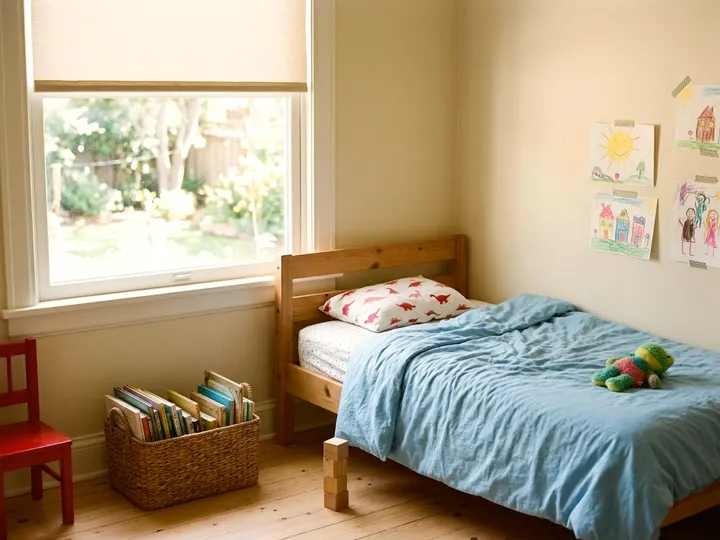
Decorating a toddler's bedroom means shifting your focus from nursery style to simple floor-level safety. You need a space where a young child can safely move around at night without pulling down heavy furniture or getting tangled in window cords. A bare, secure room helps you rest easier.
Timing the move to a big kid bed
The American Academy of Pediatrics suggests moving to a big kid bed once a toddler can climb out of the crib. You might hear a thud in the night and realize they scaled the railing. You might walk in to find your two-year-old playing with blocks on the rug. Once they show they can get out, the AAP says it is time for a big kid bed.
Plan the switch soon. A fall from the top of a crib rail can hurt a small child. You can place the crib mattress on the floor until the new bed arrives. A mattress on the rug gives them a familiar place to sleep while you shop.
A mattress on the floor makes any roll-off a short drop. It buys you a few days or weeks to decide between a toddler bed and a regular twin bed. Keep the familiar crib sheets on the mattress to help them feel secure. The smell of their own sheets may make the change less scary.
Keep the bed away from windows and cords
Where you place the bed matters just as much as the bed itself. The American Academy of Pediatrics says not to place a crib or any other child's bed near a window. A toddler standing on a mattress can reach a window, so keep the bed away from it.
Move the bed to an interior wall instead. Leave a clear space between the bed and the radiator.
You also need to look closely at your blinds and shades. The Consumer Product Safety Commission says the safest option when young children are present is cordless window coverings. Long pull cords pose a serious strangulation risk to a curious toddler.
You can replace older corded blinds with cordless window coverings, which the CPSC calls the safest option when young children are present. You can also hang simple cotton curtains without cords on a short rod. Make sure the curtains do not pool on the floor where a child might trip.
Clear out heavy furniture and big toys
A toddler out of a crib has free run of the room. You need to look at the space from a toddler's eye level. They will trip in the dark when they wake up confused. They will fall out of bed onto the floor.
Remove any heavy furniture and big toys a child could fall against. A wooden rocking horse belongs in the living room now. Take out the bulky changing table if you no longer use it. Less furniture means fewer corners to hit during a midnight stumble.
Keep the floor path from the bed to the bedroom door completely clear to prevent injuries. Pick up stray wooden blocks or toy cars before you turn out the lights, because stepping on a hard plastic toy in the dark hurts. A bare floor is easiest to keep safe while a child learns a new bed.
Anchor the furniture that stays
Any piece of furniture left in the room needs to be secured to the wall. Toddlers pull out dresser drawers to use them as stairs. They climb bookcases to reach a favorite stuffed animal on the top shelf. A heavy dresser can tip over and seriously hurt a small child.
Attach every heavy piece to the wall using anchoring hardware and follow its instructions. You can learn exactly how to do this by reading our guide on kids bedroom furniture that stays put.
Do not trust the weight of the furniture to keep it upright. Even a short three-drawer dresser needs wall anchors.
Do not leave a heavy lamp or a sound machine sitting on top of a tall dresser. A toddler pulling on a power cord can bring a heavy object down on their head. Move cords behind the anchored furniture where small hands cannot reach them.
Install safety gates for peace of mind
Your toddler may eventually figure out how to turn the knob and open the bedroom door. You might wake up to find them wandering the hallway. The American Academy of Pediatrics suggests a safety gate across the bedroom door and a gate at the top of the stairs.
A gate at the bedroom door keeps them safely in their room while letting air circulate. You can hear them if they call out for water. A second gate at the stairs stops a sleepy child from taking a dangerous tumble in the dark.
Install the stair gate securely and follow the maker's instructions for use at the top of the stairs. Two gates provide a backup layer of protection for your family. Keep the gates locked until morning.
Calm colors and a space for drawings
Decorating a toddler's bedroom works best when you choose calm colors. Toddler room ideas usually focus on bright primary colors and busy cartoon characters. Those loud patterns might look fun in a store. They may make it harder for a young child to wind down at night.
Paint the walls a soft sage green, a warm beige or a muted blue. Save the bright red paint for the playroom. A calm bedroom can help set a sleepy mood.
You can still make the room feel like it belongs to them. Frame a few of their own crayon drawings and hang them low on the wall. Pick up a cheap plastic frame from a craft store and swap the pictures out every month.
They get to see their artwork without overstimulating their senses before bed. Add a soft washable cotton rug next to the bed. A warm rug gives small bare feet a soft place to land in the morning. Keep the decorations simple and easy to wash in a standard washing machine.
Soft light for better sleep
Overhead lights are too harsh for the hour before sleep. A glaring ceiling bulb wakes them up just when you need them to settle down. Bring in a small lamp with a warm yellow bulb. Place the lamp on a high shelf where little hands cannot reach the cord or the hot glass.
Turn off the main light while you read them a bedtime story. A dim room feels more like bedtime. You can also add a small plug-in nightlight near the floor.
A dim nightlight provides just enough glow for them to see their water bottle and helps you spot the floor. Look for a cool-running nightlight and keep it away from drapes and bedding. Avoid nightlights that project moving shapes onto the ceiling. Those moving lights may distract a tired child.
Sorting out clothes and small toys
A young child easily feels overwhelmed by too many choices. Keep most of their toys in another room. Keep only a few quiet items in the bedroom. A small basket of board books and a few soft stuffed animals are enough.
Less clutter helps a restless toddler relax. You can rotate the books every few weeks to keep them interested. The same idea applies to their clothes. A toddler does not need a closet full of outfits they never wear.
Keep two weeks of comfortable everyday clothes in the dresser. Box up the clothes that are too small and store them under a bed in another room. You can find more small kids bedroom ideas that leave floor space to help keep the room organized. A tidy room feels larger and gives them a clean patch of floor to sit with a book.
Setting up a simple morning station
Toddlers love to do things by themselves, so you can help them build confidence with a simple morning station. Place a small hook on the wall at their eye level. Hang tomorrow's shirt and pants on the hook before they go to bed. They can grab their own clothes in the morning.
Put a small basket on the floor for their clean socks and shoes. This small step gives them a sense of control over their day. It also saves you ten minutes of arguing over outfits while you try to get out the door.
You might also add a low shelf with a few safe books they can look at if they wake up early. Teaching them to play quietly in their room for fifteen minutes gives you a chance to drink your morning coffee.
Ask your pediatrician about sleep questions
The change from a crib to a regular bed often disrupts a child's sleep schedule. They might leave bed or resist the new setup for several nights. Give them time to adjust to the new freedom. A toddler testing boundaries is a normal part of growing up.
If the sleep struggles continue or worry you, reach out for help. Ask your pediatrician about sleep or safe sleep questions. A doctor can check for other reasons your child might be waking up.
Your pediatrician knows your child and can offer guidance that fits your family. Do not hesitate to call their office if you feel stuck or exhausted.