- FSN Mag
- Kids Bedrooms
- 9 small kids bedroom ideas that leave floor space to play
9 small kids bedroom ideas that leave floor space to play
Find small childrens bedroom ideas that keep toys organized and leave open floor space for your kids to play comfortably in their own room.
Written for you by Yvonne Fairbanks
7 quiet minutes to read
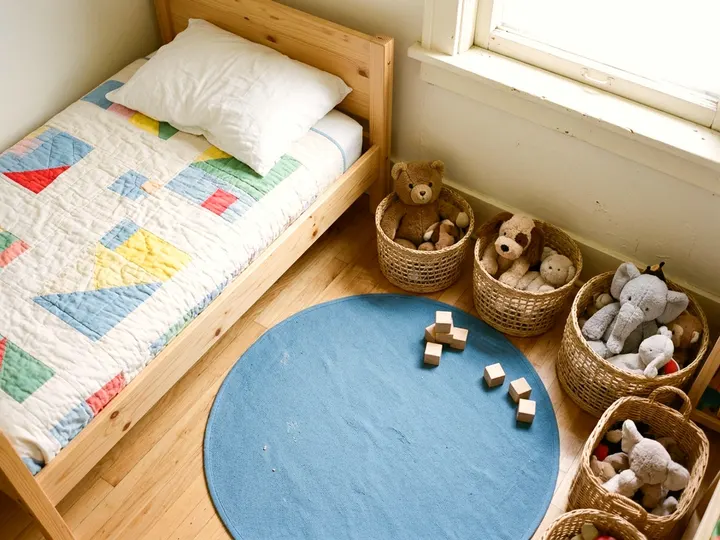
Keeping toys and furniture out of the middle of the room gives kids space to build, spread out, and play. Small childrens bedroom ideas often start with pushing the big items against the walls. This simple step creates an open spot for wooden blocks and race tracks.
Kids spend most of their time down low, so floor space is the most useful space in their room. They need room to stretch their legs and set up sprawling games. A clear floor also keeps the room from feeling cramped and makes cleaning up easier for everyone.
1. Decide how much clear floor your child needs to play
Start with the floor itself. A five-year-old needs a wide, open square to set up a wooden train track. Measure out that space in the middle of the bedroom. Keep this zone free of permanent furniture.
The American Academy of Pediatrics suggests clearing away furniture and large toys that could injure a child who falls against them. An open center makes the bedroom safer and much easier to walk through.
You can build the rest of your storage plan around this empty space. Push the bed into a corner and line small dressers flat against the opposite wall.
2. Low open bins a child can reach
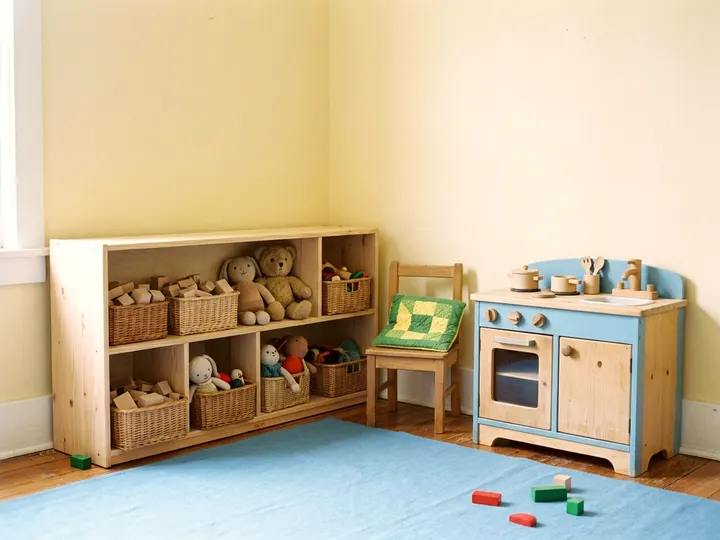
Put everyday toys in wide, shallow bins directly on the floor. A three-year-old can see exactly where the plastic animals and wooden blocks live. They can grab a bin, slide it over to their play spot, and dump it out. Open tops mean they can toss the toys right back in when they finish.
Skip plastic bins with tight lids or tall sides. Small children get frustrated when they cannot see inside or open the box on their own. That frustration often leads to dumped boxes and bigger messes.
Line up three or four matching fabric or plastic bins along the longest empty wall. This keeps the toys organized without eating up vertical space. It also stops small items from migrating under heavy furniture. Your child knows exactly where to find their favorite things without asking for help.
3. Under bed storage on rollers
Roll-out drawers turn the empty dark space under the bed into a prime toy garage. Find wide wooden or heavy plastic bins with small caster wheels attached to the bottom. You can fit two or three large bins under a standard twin bed. This keeps bulky items like stuffed animals and cardboard building blocks completely out of the way.
The wheels mean a child can pull the drawer out without scraping the wooden floor or snagging the carpet. When they finish playing, they push the bin back out of sight with one foot. It keeps the room looking tidy while holding a massive amount of stuff.
If you are setting up a toddler bedroom, look for low bed frames that still leave plenty of clearance for these rolling bins. Some beds come with drawers built in. If yours does not, adding separate rolling bins is an inexpensive fix.
4. A toy rotation so fewer toys are out
Pack half the toys into heavy cardboard boxes and put them in a hall closet. A bedroom with fewer toys feels bigger and stays cleaner. Many children settle into play more easily when fewer toys are out.
Switch the toys out every three or four weeks. Bring back the toy kitchen food and pack away the dinosaur figures. The old toys feel fresh again. This rotation system frees up crucial square footage in a small room, saving you from buying shelves for every single toy.
Children's products intended for children under 3 that present a choking hazard from small parts are banned. A small part fits entirely into the small parts cylinder, so keep toys with tiny pieces out of the rotation while a child under 3 plays in the room.
5. Hooks at child height for bags and costumes
Mount a wooden peg rail on the wall right at your child's eye level. Wall hooks get bulky fabric items off the ground and take up almost zero room. A child can hang up their own school backpack, a heavy winter coat, or a superhero cape. Getting these things off the floor instantly makes a room look larger.
Hooks are often easier than plastic hangers for young kids, because a child can drape a thick strap over a peg without fine motor skill. When things are easy to put away, kids are more likely to do it.
Space the wooden hooks wide apart. This leaves enough room for a thick coat to hang flat against the wall without crowding the next item. You can add a second row of hooks higher up for items you want to keep out of reach.
6. A rug that marks the play zone
Lay a large, soft area rug right in the middle of the room. This tells your child exactly where the play space lives. Kids respond well to boundaries they can clearly see. If the train tracks stay on the blue rug, they stay out of the bedroom doorway.
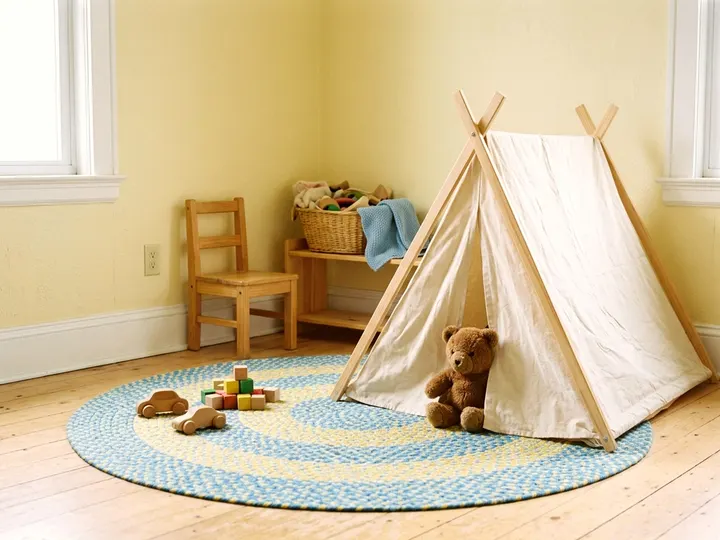
A thick rug also cushions knees and muffles the loud sound of dumped plastic building blocks. It makes sitting on the floor comfortable for hours at a time. Choose a rug with a low flat pile so tall block towers do not tip over easily.
Tape the edges down with double-sided carpet tape. This keeps the corners flat so nobody trips when running into the room. A taped rug is less likely to slide when a child drags a toy box across it.
7. When two kids share a room, give each one a shelf
Give each child a dedicated spot that the other sibling cannot touch. In shared bedrooms, squabbles often start over messed-up creations or broken toys. Install one simple floating wall shelf for each child. A seven-year-old can put a fragile clay figure on their shelf and know it will stay safe.
Place the older child's shelf higher up on the wall, completely out of reach of the younger one. This simple rule saves a lot of arguments.
The floor stays clear because their most prized possessions have a permanent home on the wall. They do not need to build a defensive wall of pillows on the floor to protect a finished puzzle.
8. A reading corner with a floor cushion
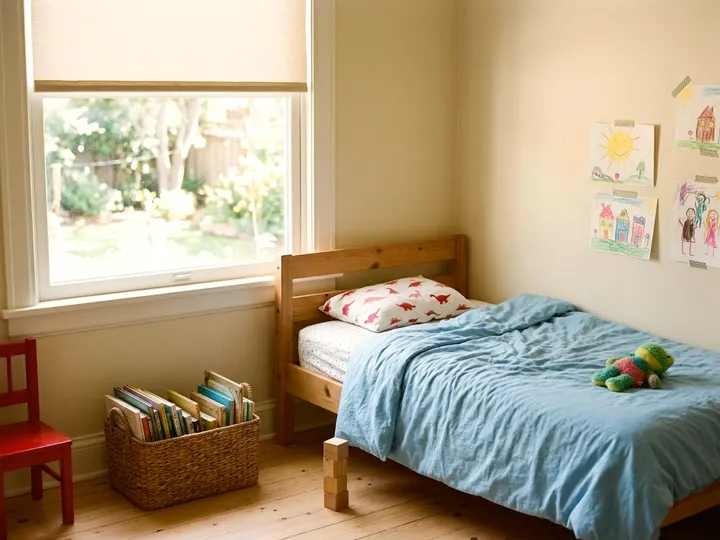
Put a heavy cotton floor cushion in one corner next to a small woven basket of books. Small bedroom plans often focus on active play, but kids also need a quiet place to sit. A single square floor cushion takes up much less space than a toddler armchair.
When your child wants more floor room for a big game, they can slide the cushion under the bed. They can also lean it flat against the wall. It is light enough for a four-year-old to move alone.
Fill the book basket with ten paperbacks and rotate them out monthly. This keeps the reading corner tidy and the books interesting. You avoid the need for a bulky wooden bookcase that eats up valuable floor space.
9. A weekly five-minute reset
Pick one evening a week to clear the bedroom floor completely. Grab a plastic laundry basket and toss in every stray sock, crayon, and puzzle piece left on the rug. Put the trash in the bin and put the toys back in their correct boxes. A small bedroom feels tiny when clutter takes over the floor.
Doing this task takes about five minutes on a Thursday night. It gives you and your child a clean slate for the weekend. You do not have to reorganize the whole closet. You just need to see the floor again.
You might use this quick sweep to build better daily habits as a parent. A clear floor prevents you from stepping on sharp plastic toys in the dark.
Keep the messy things in the living room
Keep messy art supplies and loud electronic toys in the main living areas of the house. A peaceful room helps kids wind down at the end of a long day, so send the finger paints to the kitchen table. Keep the bedroom for sleep, books, and quiet building toys.
When you limit what goes into the bedroom, you limit the mess that can happen there. A child does not need access to every toy they own at all times. Guard the floor space and keep the furniture simple.