- FSN Mag
- Kid Friendly Yards
- Kiddie pool rules that keep toddlers safe in the backyard
Kiddie pool rules that keep toddlers safe in the backyard
Keep toddlers safe in your kiddie pool backyard setup with touch supervision rules and simple daily habits that lower risk and limit germs.
Written for you by Yvonne Fairbanks
6 quiet minutes to read
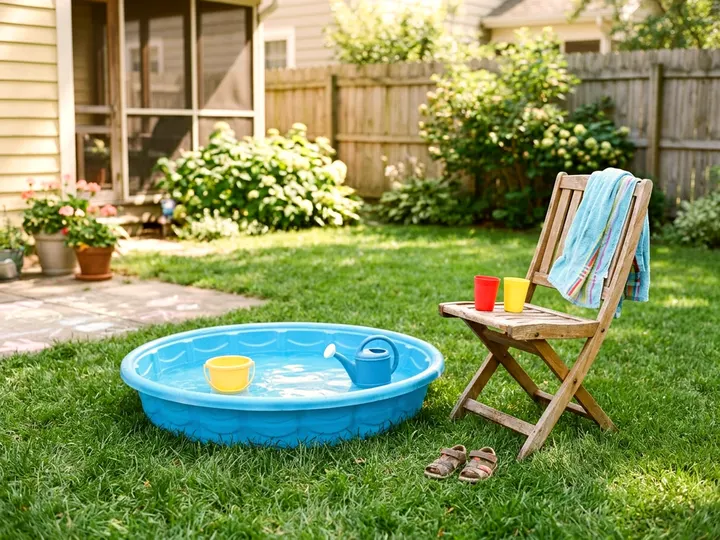
A plastic pool on the grass gives a toddler instant relief on a hot afternoon. Keeping that water safe means staying right next to your child and emptying the pool the minute they step out. You need constant supervision to prevent accidents and a daily cleaning routine to stop germs.
Choose a flat and shady spot in the yard
Set up your backyard kiddie pool on a level patch of grass. A slope causes water to pool on one side and makes the plastic bottom slippery. The ground should be soft in case of a slip.
Grass offers a good cushion. Concrete patios and wooden decks are too hard for a plastic wading pool. A slip on wet plastic over concrete can mean a hard fall.
You also want to check the ground for sharp rocks or sticks that could puncture the bottom. Look out for creeping vines in the corners of the yard. Knowing what poison ivy looks like helps you clear a safe zone.
Find a spot that gets steady shade from a tree or a house wall. Toddler skin burns fast in direct sun. If your yard has no natural shade, pitch a beach tent or a large patio umbrella over the water.
You will be sitting right there with them on the grass, so the shade keeps you comfortable too. Avoid placing the pool directly under a bird feeder or a tree that drops a lot of messy leaves.
Keep an adult within arm's length using touch supervision
Small amounts of water carry extreme risk for small children. The Centers for Disease Control and Prevention says more children ages 1 to 4 die from drowning than any other cause of death. A child can slip under the surface quickly and quietly.
The American Academy of Pediatrics says to keep toddlers within arm's length with touch supervision during bath and swim time. You must be close enough to grab your toddler instantly. This means you sit on the edge of the pool or right beside it on the grass.
You cannot read a book, scroll your phone, or step inside to check the oven. Constant focus is tiring but strictly required. If you have to go into the house for a dry towel or a glass of water, the toddler gets out of the pool and goes with you.
Gather everything you need before you turn on the garden hose. Bringing your supplies outside first means you never have to leave your child alone in the water. Grab these items:
- Two large dry towels
- Sunscreen and a wide hat for your toddler
- A pitcher of ice water and a plastic cup
- A fully charged phone placed out of reach
Building small habits to manage your time helps you stay present. Keep your phone for emergencies only while your child is in the water.
Empty the pool right after play and turn it over
A wading pool is only safe when it is completely dry between uses. The American Academy of Pediatrics says to drain wading pools, buckets and similar containers right after use. You cannot leave the water sitting while you go inside for lunch.
Dump the water into the grass or down a yard drain the moment your child steps out. Pour it away from your house foundation to keep your basement dry.
Once the water is gone, flip the empty plastic pool upside down. Turn any play buckets over and store them against the fence.
Leaving a pool upright means a sudden summer rain shower can fill it back up. Even a little rainwater can be a drowning hazard for a wandering toddler. A flipped pool stays dry and tells children that swim time is officially over for the day. Storing it upside down also protects the plastic bottom from fading in the afternoon sun.
Change the water daily to stop germs
Without disinfectant, germs spread more easily in a small kiddie pool. Kids sit in the pool in swim diapers, drop crackers in the water, and wash dirt off their bare feet.
The Centers for Disease Control and Prevention says water in small inflatable or plastic pools should be emptied at least daily to help prevent the spread of germs. The CDC also says not to add chlorine or bromine to a small kiddie pool, so emptying it every day is the way to keep it clean.
Wipe down the plastic sides and bottom with a mild dish soap and a sponge once the pool is empty. Rinse the soap off with a garden hose and leave the pool in the sun to dry.
The CDC says to rinse off dirt and let the pool air dry. If the inside of the pool feels slimy to the touch, scrub it with soap and water and rinse well.
Toys and floaties do not replace your eyes
A plastic ring or a foam noodle is a fun toy. It is not a safety device. Water wings can deflate and do not prevent drowning, and the American Academy of Pediatrics points families to a U.S. Coast Guard approved life jacket instead.
Toys give parents a false sense of security. You might assume your toddler is safe because they are holding a foam kickboard. That assumption leads to terrible accidents. Touch supervision remains the absolute rule no matter what toys are in the water.
Keep the toy count low. Too many plastic boats and watering cans clutter the surface. You need a clear and unobstructed view of your child at all times.
When play is done, take all the toys out of the yard. Toys left near the pool attract toddlers back to the water area when you are not looking. Instead, use those buckets and rings to build a fun dry obstacle course on the grass.
Call 911 immediately if a child is not breathing
If a child slips under the water, pull them out immediately. Stay with the child.
Call 911 the moment you realize the child is not breathing. Put your phone on speaker so your hands are free and follow what the dispatcher tells you. Do not waste precious seconds trying to find a neighbor or calling a partner at work.
The dispatcher will likely ask for your address and the child's age and will guide you until help arrives. Follow their instructions without hesitation. Stay on the line until the paramedics walk into your backyard.
Take swim lessons and learn CPR
Every adult in the house needs to know how to respond when a child stops breathing. The American Academy of Pediatrics says everyone in the family should learn CPR and that swim lessons are recommended for children and parents.
CPR skills fade without practice, so take a refresher class if it has been a while. Look for classes through the American Red Cross or the American Heart Association, as the CDC suggests. Knowing how to give CPR can save a life before the paramedics arrive.
The AAP says readiness varies, and your pediatrician can help you decide when a child is ready for lessons. These lessons do not make a child completely safe alone in the water, but they add a vital layer of protection.
A permanent pool needs a four-sided fence
Many families eventually replace the plastic basin with a larger permanent swimming pool. A pool that stays filled with water all summer requires a tall physical barrier.
A proper pool fence must surround the water on all four sides. The house itself should not act as one of the four sides. A toddler can slip out a back door or a ground floor window and fall directly into the water if the house forms a boundary.
The fence needs a gate that closes and latches on its own after someone walks through. Place the latch high on the inside of the gate so small hands cannot reach it.
Remove any patio chairs or large planters stored near the outside of the fence. A determined child can climb on a chair to boost themselves over the top. Check the gate latch every week to make sure the spring still pulls it tight.
More for your crew
What poison ivy looks like and how to keep kids away from it
7 quiet minutes to read

9 backyard obstacle course ideas from things you already own
8 quiet minutes to read