- FSN Mag
- Kid Friendly Yards
- 9 backyard obstacle course ideas from things you already own
9 backyard obstacle course ideas from things you already own
A backyard obstacle course keeps kids active using household items. Build a loop with hula hoops, pool noodles and laundry baskets for supervised outdoor play.
Written for you by Yvonne Fairbanks
8 quiet minutes to read
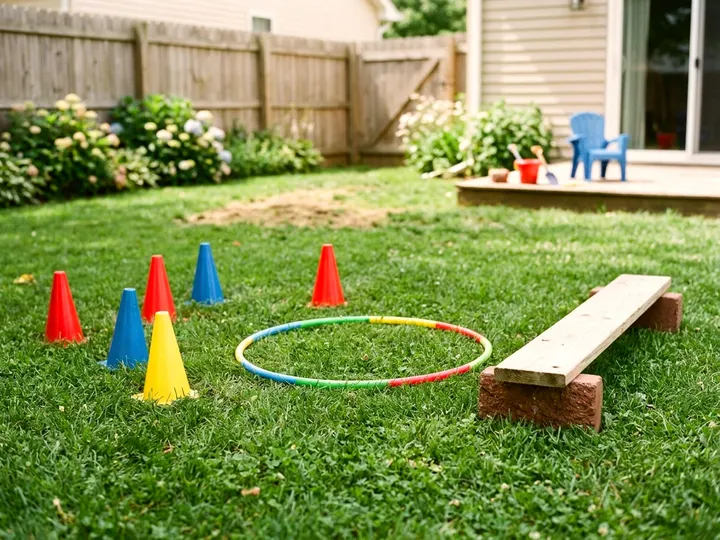
A backyard obstacle course turns standard household items into a complete outdoor activity station. You can build a safe and challenging run using objects you already have in the garage. Kids burn off energy outdoors while you sit nearby on the patio.
1. Plan a loop with a start and a finish
A successful yard circuit needs a clear direction of travel. Kids run the course on repeat when the finish line sits near the start. A loop stops arguments about who goes next. It also prevents collisions when multiple children play at once.
You can define the starting point with a garden hose laid in a circle. A patio chair or a specific tree works well as a finish line. Walk the path with your kids before they start running. Point out each station and explain what they need to do.
Ask your kids to draw a map of the course with crayons before you build it. This planning stage builds excitement and gets them involved early. Clear away any dog toys or garden tools before you start laying out the stations. A clean yard prevents twisted ankles when the running starts.
Keep the total footprint contained to one area of your yard. You want to see every station from where you sit. A compact layout also leaves the rest of the grass open for other games.
2. Hula hoop hops and cone weaves
Agility stations force kids to slow down and control their feet. Lay a row of hula hoops flat on the grass and ask children to step in each hoop with one foot. They can also jump with both feet together. Space the hoops closer for toddlers and further apart for older kids.
Hang the hoops on a hook in the garage when the day is done. They take up almost no space.
A weaving station challenges their balance and speed. Set up a line of small orange sports cones. If you lack cones, use inverted plastic plant pots or sand buckets. Place them a short distance apart in a straight line or a zigzag pattern.
Tell your kids to weave around the outside of every cone without touching them. This simple drill mimics soccer practice and burns energy quickly.
3. A pool noodle limbo bar
A limbo station adds a bending challenge to the run. You just need a bright foam pool noodle and two objects to rest it on. Two identical lawn chairs or two clean outdoor trash cans work perfectly. Bright colors make the obstacle easy to see when they are sprinting.
Lay the foam tube loosely across the seats of the chairs. Do not tape or tie the noodle down. You want the bar to fall away harmlessly if a child bumps it. A rigid broomstick or a tied rope can cause bruises if a child trips.
Ask the kids to lean backward and pass under the noodle. They must do this without knocking it off. You can lower the bar for older kids by resting it on overturned buckets. This station breaks up the fast running portions of the course.
4. Crawl under a blanket draped over chairs
A crawl tunnel forces kids to get low to the ground. You can build one in five minutes with an old blanket and heavy patio furniture. Line up four chairs in two rows facing each other. Drape the blanket over the backs of the chairs to form a dark passage.
A heavy moving blanket works better than a light bed sheet. A sheet will blow away with a gentle breeze. You can secure the edges of the blanket with heavy stones if the wind picks up.
Make sure the chairs are heavy enough that they will not tip over easily. Wooden dining chairs or metal outdoor chairs often offer good stability. Pull the blanket tight so it does not sag in the middle of the tunnel.
Keep the tunnel short so younger children can always see the exit. A four-foot crawl is long enough to be fun without feeling restrictive. Let them crawl on the soft grass rather than a hard patio surface.
5. A balance beam from a flat board on the grass
Balance challenges are a simple way to practice steady footing. You can make a ground-level beam using a simple piece of scrap lumber. A standard 2-by-4 board from the garage is ideal. Lay the board completely flat on the lawn.
Make sure the wood has no exposed nails or sharp splinters. Sand down rough edges if you plan to keep the board as a permanent play item.
Tell your kids to walk heel to toe from one end of the board to the other. If they slip off, they just step onto the soft grass. Never prop the board up on bricks or blocks. Raising the wood can create a tipping hazard and a higher fall.
If you do not have spare lumber, you can make a line on the grass. Use a long piece of thick rope or a garden hose. Ask the kids to walk the tightrope without stepping off the line.
6. A bean bag toss at a laundry basket
Target practice adds a moment of concentration to a busy yard circuit. Set up a tall plastic laundry basket near a fence or a wall. Give the kids three bean bags to throw into the basket. They must sink all three before they can move on.
You can use a cardboard box if you lack a spare basket. Weigh the box down with a brick so the bean bags do not knock it over. You want the kids to throw hard without breaking the setup.
The wall acts as a backstop for wild throws so you do not chase bags. If you do not own bean bags, rolled up pairs of socks work just as well. Tennis balls also work but they bounce out of shallow baskets easily.
Mark a throwing line on the grass with a stick. You can move the line back for older children to make the shot harder. This stop gives them a chance to catch their breath.
7. A sprinkler dash for hot days
A water element turns a regular yard course into a summer event. Place a standard oscillating sprinkler in the middle of the lawn. You can set the water pressure low so it only covers a small patch of grass.
Make the sprinkler dash the final leg of the circuit. Kids can run through the water right before they cross the finish line. Keep the water spray far away from the blanket tunnel and the balance board. Wet wood is slippery and a soaked blanket will drag in the mud.
You can move the sprinkler around to water different parts of the lawn while they play.
Remind your kids to use bare feet or water shoes for this version. Running on wet grass in sneakers may soak the shoes. Monitor the ground to ensure the yard does not turn into a mud pit.
8. Keep jumps and climbs low and supervised
Safety dictates what you can build in a temporary yard setup. Professional playgrounds have thick rubber mats or deep mulch to cushion falls. Your backyard lawn does not offer that protection.
The Consumer Product Safety Commission says to use a minimum of 6 inches of protective surfacing for play equipment less than 4 feet high, and that grass and dirt are not considered protective surfacing. You should never ask kids to jump off retaining walls or patio tables onto the lawn.
If you own a permanent wooden play structure, it needs proper ground cover. The Consumer Product Safety Commission says to maintain 9 inches of loose fill such as wood chips or mulch for home equipment up to 8 feet high.
Do not tie ropes between trees to create climbing nets, as ropes can entangle small children. Stick to objects that simply rest flat on the lawn. A fast run across the grass is plenty of physical activity. Supervise the kids closely and remove any broken or sharp items immediately.
9. Time the course and let kids set the rules
A timer adds a competitive edge without pitting siblings directly against each other. Use the stopwatch app on your phone to time each run. Have children race to beat their own personal best time rather than racing a sibling.
This method keeps younger kids from feeling discouraged. Once they know the route, sit back and let them manage the game.
Children love to modify the rules as they play. Let them decide that they have to hop the entire way on one foot. Allowing them to redesign the loop keeps the activity fresh all afternoon.
Offer a small reward for completing the circuit five times in a row. An ice pop or a cold juice box makes a great prize. Sitting down for a snack marks a natural end to the activity.
Taking the physical play indoors
Heavy rain or extreme heat can ruin plans for an outdoor circuit. You can still create active games inside the house without breaking your living room furniture. Swap the running and jumping for low-impact movement games that fit in a hallway.
If you need ideas, try these ten-minute family activities to keep kids moving safely. You can use painters tape to mark hopscotch squares on a hard floor. Pillows become stepping stones across a lava pit in the den. Focus on balance and stretching when space is tight.
If they need a dedicated space to burn off energy inside, look into playroom ideas on a budget that leave floor space open for movement. A permanent indoor play area takes the pressure off when the weather keeps you out of the yard.
More for your crew
What poison ivy looks like and how to keep kids away from it
7 quiet minutes to read

Kiddie pool rules that keep toddlers safe in the backyard
6 quiet minutes to read