- FSN Mag
- Kid Friendly Yards
- How to keep kids safe around a family lake house dock
How to keep kids safe around a family lake house dock
Keep your kids safe around the lake house dock with these practical water safety tips. Learn how to set rules and build smart habits for summer fun.
Written for you by Yvonne Fairbanks
6 quiet minutes to read
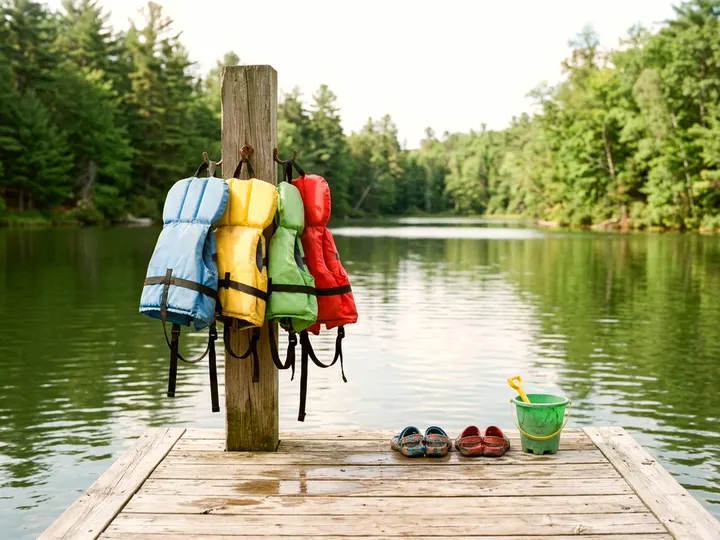
A safe lake house starts with a fitted life jacket for every child and an adult standing by the water. You build a routine that makes safe behavior automatic before anyone steps onto the dock. Then the whole family can relax and actually enjoy the summer.
Wear a life jacket for every trip to the dock
Start the habit before you even pack the car. The CDC advises that children use life jackets for all activities in and around natural water. A life jacket goes on before a kid walks down the path to the lake. Make it as normal as putting on shoes for the playground.
You need jackets that fit your children right now. A jacket that fit a toddler a year ago will likely ride up around their ears by now. Test the fit by lifting the shoulders of the jacket while your child stands in the living room, and check the label for the right size and weight range.
Keep the life jackets hanging on sturdy hooks right by the back door. A child will not forget to grab one if it blocks the exit. South Carolina requires a US Coast Guard approved wearable life jacket for each person on board a boat. Any person under twelve on a boat under 16 feet must wear one.
Store a few extra jackets in different sizes for visiting friends. Buy a drying rack for the porch so the jackets do not smell like damp lake weeds by August.
Give one adult the job of watching the water
Group settings often lead to distractions. You might think your sister is watching the kids while you grab the sunscreen. She thinks you have your eyes on the dock. That gap is where accidents happen.
You need a designated water watcher. One adult takes the job for a set time and does absolutely nothing else. They do not read a book or flip burgers. They do not scroll their phone.
The CDC says more children ages 1 to 4 die from drowning than from any other cause. Drowning happens in seconds and is often silent.
Hand the watcher a physical item like a bright yellow lanyard or a silly hat. When they wear it, they are on duty. Tell the kids that the person in the hat is the boss of the dock.
If the watcher needs to use the bathroom, they physically hand the hat to another adult. This simple handoff leaves zero room for anyone to assume someone else is looking.
Schedule swimming lessons before summer starts
Lessons teach a child how to float, tread water, and find the stairs. Get them into a local class during the spring. They will build muscle memory before they ever see the lake.
Even the best lessons do not make a child waterproof. The CDC says children who have had swimming lessons still need close and constant supervision near water. A lake feels very different from a tiled community pool. The water is darker, colder, and sometimes moves unpredictably.
Fish bump into legs, and mud covers the bottom. Kids need time to adjust to these new sensations. Start slow and stay right next to them in the shallows on the first day.
Show them how to safely step off the dock ladder instead of jumping blindly into murky water. Teach them to look for submerged logs or rocks before they get in.
Teach plain rules for the dock and the water
Kids respond well to clear boundaries they can memorize. Sit down over breakfast and go over the lake rules. Keep them short and easy to say out loud. Ask your kids to repeat the rules back to you before you open the back door.
Try these four rules:
- Walk on the wood at all times to prevent slips and scraped knees.
- Wear water shoes to protect feet from splinters and hot boards.
- Stay completely away from the boat lift machinery and metal cables.
- Never go through the dock gate without an adult holding your hand.
Make sure visitors know the rules before they unpack their bags. Grandparents and cousins need to follow the exact same guidelines. If a child breaks a rule, have them sit on a towel by the house for five minutes.
Watch for boat traffic and local speed rules
A lake house means sharing the water with other families, fishermen, and water skiers. You need to know how fast boats can move near your property. On Lake Keowee, boats may not go faster than idle speed within 100 feet of a dock or pier, or within 50 feet of a moored vessel or a person in the water.
Keep your kids close to the dock and out of the main boat channels. Set a visual boundary using a large tree on the opposite bank or a floating buoy. Tell the kids they cannot swim past that mark.
Bright swimsuits may help boaters spot a small child in the water, so skip blue, gray, and black. Teach your kids to stay close to the ladder if a boat drives past. A boat wake can rock the dock and may knock a small child off balance.
Plan a daily routine for outdoor play
A busy day of playing outside often helps kids sleep well at night. Break the day into chunks so nobody gets too sunburned or cranky. Spend the morning on the dock while the sun is still low and the water is calm.
Head up to the house for lunch and quiet time indoors during the hottest hours. You can build small habits that make you a better parent by knowing exactly when you will get a moment to sit down. Routine makes kids feel secure and stops the endless requests to go swimming.
When the kids wake up from their naps, keep them on dry land for a bit. You might set up backyard obstacle course ideas on the grass away from the water. A simple path with plastic cones, a jump rope, and a few hula hoops burns off energy safely.
After dinner, walk down to the lake together to look for frogs or watch the sunset. A structured day gives parents predictable breaks and keeps the water feeling like a special treat.
Look for safe features when you pick a lake house
Buying a waterfront property requires an eye for safety features. A gentle slope from the yard to the water is much safer than a steep drop off a retaining wall. Look for a dock with a sturdy gate that latches out of a toddler's reach. You want clear sightlines from the kitchen windows down to the shoreline.
If you are looking at a specific area, learn about the local water. Lake Keowee is owned and managed by Duke Energy and covers about 18,500 acres. For help finding a spot that fits your family, you could also look at Keowee Houses.
Check the depth of the water right off the dock before you commit. Shallow areas let young kids wade safely. Deeper water works better for older kids who want to practice their cannonballs.
Consider adding an alarm on the back door of the house. A simple battery-powered chime alerts you the second a child opens the door to head outside.
You might also want to establish kiddie pool rules for an inflatable pool on the deck. A shallow splash pool keeps toddlers perfectly happy while older kids swim in the lake.
More for your crew
What poison ivy looks like and how to keep kids away from it
7 quiet minutes to read

Kiddie pool rules that keep toddlers safe in the backyard
6 quiet minutes to read