- FSN Mag
- Family Meal Plans
- A bulk cooking plan for the freezer that feeds a family
A bulk cooking plan for the freezer that feeds a family
A bulk meal prep plan for the freezer helps you cook big batches of family dinners at once so you can quickly reheat them on busy school nights.
Written for you by Forrest Yewell
7 quiet minutes to read
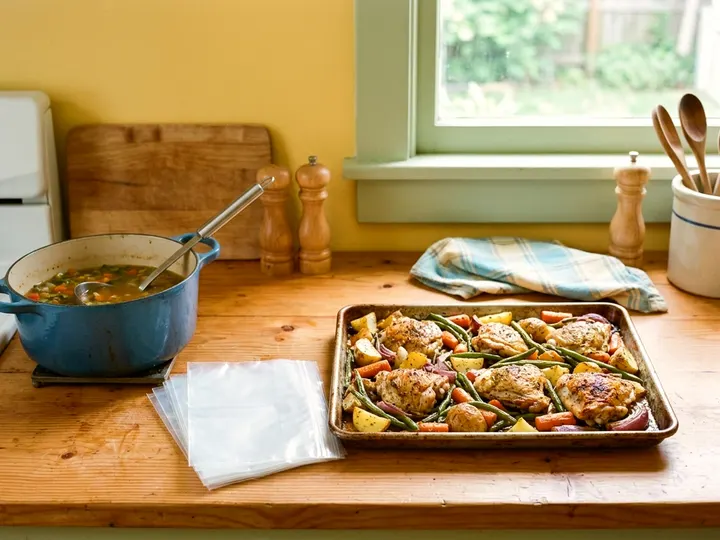
Making two or three large batches of food on a weekend afternoon gives you weeks of dinners ready to warm up. This bulk meal prep plan fills your freezer with flat bags of homemade soup, chili and pasta bakes. You cook once and get multiple nights off from the kitchen.
Pick two or three recipes that freeze well
Kids usually eat familiar food best. Choose meals your family already likes to see on the table. Thick stews and meat sauces freeze well. Baked pasta dishes hold their shape well in the cold.
Skip recipes with a lot of heavy cream because dairy separates in the freezer and turns grainy. Potatoes get mushy when frozen in liquid, so use pasta or rice instead for bulk. Pick just two or three different meals for your session. Cooking five different recipes at once is a lot for one afternoon.
Make triple batches of those three choices, like a giant pot of turkey chili or four pans of macaroni and cheese. A big batch of chicken soup is always useful. This method gives you variety across the month so you do not have to eat the same meal four days in a row.
A good freezer recipe needs liquid, since dry chicken breasts dry out further in the cold air. Pulled pork in barbecue sauce stays tender, and meatballs in tomato sauce keep their moisture. Try a black bean and corn chili for a cheap option, or a heavy vegetable stew.
Leave delicate fresh herbs out until you serve the food, because fresh parsley turns black in the freezer. Add it on the day you eat. Consider the sizes of your cooking pots before you start. You need a heavy stockpot for soup or to hold three batches of chili.
Standard baking dishes are fine, but foil pans work well for freezing casseroles. You can buy a stack of foil pans cheaply at the store. This saves your glass dishes for daily use.
Shop and prep for the whole session at once
Start the plan by checking your pantry shelves for the spices you need for all three recipes. Buy large quantities of your base ingredients. You might need a large amount of ground beef and a couple dozen onions. Canned crushed tomatoes cost less by the large can.
Dedicate one afternoon to the chopping and cooking. Put on comfortable shoes. Clear your kitchen counters completely. Bring out your largest cutting board and wash your knives.
Group the prep work to save time:
- Chop all the onions for all three recipes at once
- Peel and slice all the carrots and celery together
- Crush every clove of garlic you need for the day
- Measure your dry spices into small paper cups
Put the chopped vegetables in large mixing bowls to save you from washing the cutting board multiple times. Brown your ground meat in one massive batch, draining the fat into an empty tin can. Put the cooked meat aside in a large bowl. You can divide it into your different pots later.
This setup lets you dump the spice cup into the pot without measuring mistakes when you are tired. Clean up while the large pots simmer by wiping down the counters with a wet cloth. Load the dishwasher with the empty prep bowls. A clean workspace makes the packing phase much easier.
Cool food quickly and portion it flat
Hot food must cool down before it goes into the freezer. Putting a steaming pot into the freezer raises the temperature inside the whole appliance. This can thaw your frozen peas and soften your ice cream.
Cool the food safely and fast by transferring hot chili or soup to a wide sheet pan. A shallow layer of food loses heat quickly, and you should not leave it out for long. You can also place the hot pot in a sink full of ice water. Stir the soup every few minutes to release the heat.
Pack the cooled food into thick plastic freezer bags, using quart bags for smaller households or gallon bags for larger ones. Fold the top edge of the bag outward slightly. This keeps the plastic zipper clean while you pour.
Use a wide funnel or a measuring cup to move soup into bags. Fill the bag only halfway. Food expands as it freezes solid. A bag filled to the top can burst and make a huge mess.
Squeeze the air out before you seal it tight. Air can cause freezer burn and dull the flavor. Lay the sealed bag flat on the counter. Press it gently to spread the food evenly.
Place a clean baking sheet in your freezer and stack the flat bags on it to freeze completely solid. This usually takes several hours, and you can remove the baking sheet once they are hard. The frozen blocks now stack like books on a shelf. They take up very little room and stay organized.
Label the date and how to reheat on each bag
A mystery block of red sauce helps nobody. You must label every container clearly. Write on the plastic bag before you fill it with food. A permanent marker works best on dry plastic.
Write the name of the meal in large letters. Add the exact date you cooked it. This stops you from guessing how old the food is later.
Write the reheating instructions right on the bag, since a tired parent does not want to hunt for a recipe book. Write down if the meal needs to thaw first and note the oven temperature for a casserole. You should also write down if you need to add a cup of water to the soup.
Include serving notes if necessary, like a reminder to boil fresh pasta or top the chili with shredded cheese. This means an older kid or a babysitter can start dinner easily. The instructions are right in front of them.
Label foil pans with a marker on the cardboard lid. Wrap the whole pan in a layer of plastic wrap for extra protection. Put a piece of masking tape on the outside and write the details there. Tape stays attached well in the cold temperatures.
Know how long soups and casseroles keep
Food does not last forever in the cold. You need to know the safe storage limits for your hard work. The rules depend on the exact temperature of your appliances.
A 2023 Virginia Department of Health chart based on USDA guidance explains these times clearly. Vegetable or meat soups and stews keep 3 to 4 days in a refrigerator at 40 degrees F or below and 2 to 3 months in a freezer at 0 degrees F or below.
The same chart lists casseroles with eggs at 2 to 3 months in the freezer after baking. You can rely on these limits to plan your cooking.
Keep the freezer at 0 degrees F or below and eat your soups, stews and egg casseroles within that two to three month window, since quality can fade after that. For other dishes, check a storage chart.
Keep a running list of what you have frozen on the fridge door. Write down three bags of chili and cross one off when you take it out. This stops older meals from hiding at the back of the shelf. It also shows you exactly what dinner options you have left.
Reheat and serve without extra work on a school night
The real reward happens on a busy Thursday. The kids are loud and everyone is hungry. You do not have to chop a single onion. You just pull a bag from the freezer.
Thaw the food safely before you heat it. The best method is overnight in the refrigerator. Put the frozen bag on a plate to catch any condensation. A quart of frozen chili can take about a day to thaw.
Pour the thawed meal into a saucepan and heat it over medium low heat until it simmers softly. Stir it often so the bottom does not burn. Casseroles go straight into the oven, but leave the foil on top so the noodles do not dry out in the heat.
If you forget to thaw the bag, cut the bag open over a wide pot with a lid and slide the icy block in. Add a quarter cup of water and cover it. Cook on low heat until it melts entirely and is steaming hot all the way through.
Add a fresh element to the hot meal, like warm bread and butter with stew or a bagged salad with baked ziti. You can microwave frozen green beans in a few minutes. These quick sides round out the dinner without making a mess.
This leaves you with very few dishes to wash since you toss the empty freezer bag in the trash. You wash one saucepan and some dinner bowls, and the evening has some room. You might use it to find family time when the evening feels rushed. You could even try a few ten-minute family activities before bed.
More for your crew
Plan a week of family dinners and a grocery list in 30 minutes
7 quiet minutes to read