- FSN Mag
- Kid Friendly Yards
- Which swing set is right for your backyard
Which swing set is right for your backyard
Find a swing set for backyard play that suits your kids and yard, with CPSC based tips on space, surfacing, anchoring and regular upkeep.
Written for you by Yvonne Fairbanks
8 quiet minutes to read
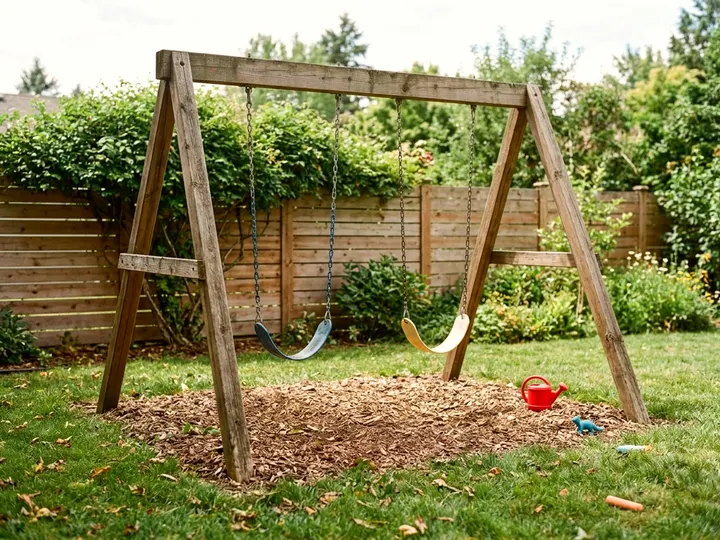
Finding the right swing set for backyard play depends on the size of your space and the ages of your kids. Start by measuring your available lawn to find a flat area that allows for plenty of clearance around the frame. This footprint dictates how big a structure you can buy, and knowing your physical limits prevents you from buying a set that feels cramped.
Match the set to the ages of your kids
Think about what your children can actually use, since toddlers need bucket swings with a restraint that holds them in, plus an adult close by. Older kids want standard belt swings or a trapeze bar to hang from. Give some thought to how fast children grow.
A basic wooden frame works well for the early elementary years. A tall metal structure fits older kids who want to swing high. Cedar holds up well to rain and resists rot naturally. Pine may need more upkeep, so check the maker's care instructions.
Pick a frame that fits your oldest child. You can swap one standard belt swing for a bucket seat while your youngest grows. It is much easier to change a swing seat than to replace an entire frame.
Kids can outgrow small plastic toddler sets quickly. A larger wooden frame often lasts longer. Think about what will keep them busy on an ordinary Tuesday afternoon. You want them climbing and sliding outside rather than sitting on the couch.
How much open yard you need around it
You need much more space than the actual footprint of the frame. Kids jump off swings while they are moving in the air. They also race around the entire structure playing tag.
The Consumer Product Safety Commission says to keep home play equipment at least 6 feet from any structure or obstacle. This strict rule includes your house and any backyard fence.
Measure outward from the outside edges of the play set. Trees, heavy branches and overhead wires all count as obstacles. You must leave at least 6 feet of completely clear space in every direction, and swings need even more room in front and behind. Take a tape measure out to the grass before you shop.
You might need to prune bushes or move a shed to make room. Do not compromise on this safety zone. Kids need that wide buffer to play without hitting a solid wall.
If your lawn is small, pick a single frame with just two swings. A modest set with safe clearance beats a massive fort crammed into a tight corner. Kids might run from the swings to your backyard obstacle course. They need a clear path to run without tripping.
Look for the home playground standard on the label
Safety standards tell you what a set was built to meet. You want to see specific testing codes on the retail box or in the manual. Do not trust a set that lacks basic safety labels.
The home playground standard is ASTM F1148. It covers the performance and design of home playground equipment, so check the manual or ask the seller whether a set follows it.
Protective surfacing requirements are found in ASTM F1292. It covers how well surfacing absorbs impact under play equipment, and the depth you need depends on the equipment height.
Look for these exact standard numbers before you buy anything.
Read the weight limits listed in the manual. A good manual lists the weight limits and how many children can play at once. Respect these numbers even when the neighborhood kids come over. Adhering to these limits keeps your family safe.
Swing spacing and where it goes in the yard
Put it where you can see it clearly from a kitchen or living room window. You want to keep an eye on them while you make dinner.
Swings need wide clearance from each other and from the wooden frame. Kids kick their legs out sideways and twist high up in the chains. They need room to flail without kicking the main support beams.
The ground under the frame must be completely level. A steep slope puts strain on the joints and makes the whole structure wobble. Dig out the high side of your lawn rather than building up the low side with loose dirt. Loose dirt can wash away in heavy rain.
Avoid low spots where rain collects after a summer storm. You do not want muddy puddles forming right where little feet land. Wet mud makes the ground slippery and ruins shoes.
Keep the swing path pointing away from your patio or outdoor grill area. You want kids swinging toward open grass. Keep it away from your backyard kiddie pool to avoid accidental collisions.
What goes under it so a fall does not hurt
The CPSC does not count grass or dirt as protective surfacing, because wear and weather reduce how well they absorb a fall. You need a dedicated play surface.
The Consumer Product Safety Commission says not to install home play equipment over concrete, asphalt or other hard surfaces. A fall onto a hard surface can cause a serious injury.
You need loose fill material to absorb the impact of a falling child. Good options are wood chips, mulch or shredded rubber. Preparing this area takes some physical work.
- Measure out the full clearance zone with a long tape measure.
- Dig up the grass and topsoil inside your marked boundaries.
- Level out the bare dirt with a heavy steel rake.
- Lay down a commercial weed barrier cloth to stop grass from growing back.
- Install heavy landscaping timbers around the outside edge to hold the mulch.
The commission says to keep at least 9 inches of loose fill for equipment up to 8 feet high.
Play surface material | Initial fill depth | Maintained depth |
|---|---|---|
Wood chips, mulch or shredded rubber | 12 inches | 9 inches |
This material packs down flat as kids run over it and heavy rain falls on it. An initial fill of 12 inches will compress to about 9 inches over time. Buying extra mulch up front saves you a trip to the store later.
Mark the wooden legs of the swing set with tape right at the 9-inch line. This gives you a quick visual check. You will know exactly when to order another load of mulch.
Anchoring and checking the hardware
Play equipment may need anchors to keep it from tipping over while kids use it. A tipping frame is a severe danger to anyone standing nearby.
The Consumer Product Safety Commission says to follow the manufacturer's instructions for anchoring. The instructions say which anchor style your set needs. Do not guess which anchors to buy.
Anchor styles vary, so use only the type your manual calls for and ask a qualified installer if you are unsure.
Your anchors should be buried or covered with protective surfacing. Exposed metal stakes pose a serious tripping hazard for small feet. Make sure the anchor points sit flush with the dirt and add an extra layer of wood chips over them just to be safe. Just as you anchor kids bedroom furniture indoors, a yard play set needs strong foundations.
If you bought a used frame, ask the seller for the manual. You can usually find a digital copy online by searching the brand and model number. Print it out and keep it in a kitchen drawer.
Slides in shade and ropes you should never add
Bright sunlight turns standard playground parts into hazards. Metal platforms and dark plastic tubes absorb a massive amount of heat on a hot July afternoon. A hot slide can ruin an otherwise perfect summer day.
The Consumer Product Safety Commission says to place bare metal platforms and slides out of direct sunlight. This simple step helps reduce the likelihood of serious burns.
Position the entire set so mature trees block the worst of the afternoon sun. Always check the slide with the back of your hand before you let a toddler climb up.
Kids sometimes try to add their own fun accessories to a play frame. Stop them quickly if they start tying extra lines to the beams. They often try to build forts with blankets and heavy string.
The commission says never to attach loop forming materials to the play set. This includes items like ropes, jump ropes, pet leashes or clotheslines.
A dangling loop creates an extreme strangulation risk. Keep jump ropes and everyday dog leashes far away from the swings. Store them in the garage when play time is over.
Check your play set twice a month
A play structure takes a beating from rough weather and daily use. Wood shifts, metal rusts and hard plastic cracks over the seasons. You cannot just build it and forget about it.
The Consumer Product Safety Commission says to check nuts and bolts twice a month and tighten as needed.
Walk around the frame with a basic wrench. Give every major bolt a firm twist to ensure it holds tight. Wood shrinks as it dries, which naturally leaves hardware loose over time. A loose bolt causes the frame to sway.
Look closely for sharp splinters on the wooden hand rails. A quick pass with rough sandpaper prevents a painful splinter in a small hand. Keep a block of sandpaper in your tool box just for this job.
Check the metal chains and S-hooks hanging on the swings. Replace any steel hook that has opened up or shows signs of deep rust. S-hooks bear the entire weight of a swinging child.
Make this quick inspection a normal part of your lawn mowing routine. A quick check keeps the backyard safe for the rest of the month.
More for your crew
What poison ivy looks like and how to keep kids away from it
7 quiet minutes to read

Kiddie pool rules that keep toddlers safe in the backyard
6 quiet minutes to read
9 backyard obstacle course ideas from things you already own
8 quiet minutes to read