- FSN Mag
- Kid Friendly Yards
- What goes under a backyard playground and how far it should reach
What goes under a backyard playground and how far it should reach
Find out what to spread under a backyard playground, how deep the mulch or sand should be, and how far it must reach to keep your kids safe.
Written for you by Yvonne Fairbanks
7 quiet minutes to read
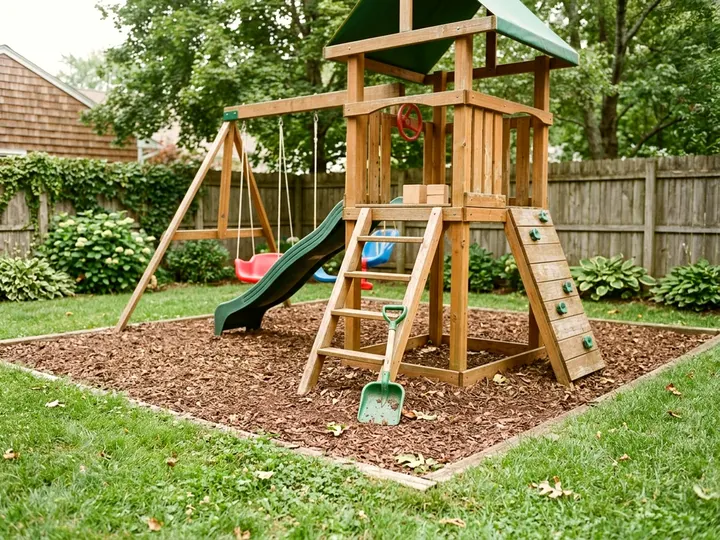
Wood chips, shredded rubber, sand, or pea gravel go under a backyard playground. You need a deep layer of loose material to cushion a bad fall. It has to reach far past the slide to keep your kids safe.
Why grass and dirt do not cushion a fall
Many parents build the climbing frame right on the lawn. Grass feels soft on bare feet during a gentle summer evening. You might think the turf will catch a tumbling toddler.
Daily play wears down that soft green carpet. Kids jump from the same swing and slide exits every afternoon. Small shoes pound the soil until it packs down hard.
A dry week bakes the ground solid. By the middle of the season, the grass often dies. You are left with bare earth in the exact spots where kids land hard.
Rain turns these bald patches into slick mud pits. A muddy child slips even faster when they try to climb back up the ladder. A safe landing zone needs material that moves.
When a child drops from a monkey bar, the surface has to give way. Dirt pushes back against their knees and elbows.
Mulch, shredded rubber, sand or mats compared
You have a few distinct options to fill the play space. Each material acts differently under small feet and changes how you maintain the yard.
Wood chips and mulch
Wood chips and playground mulch are common choices that drain well after a heavy storm. They are natural products that blend into a yard without looking messy.
Wood pieces absorb moisture. They can stay damp for a day or two after a downpour. Over a few seasons, organic mulch rots down into dirt.
You will have to rake it often to prevent mold. It can also hide small splinters, so keep shoes on.
Shredded rubber pieces
Recycled rubber does not break down or rot. The heavy chunks stay bouncy and dry out fast after a rain shower. You do not have to replace the base every spring.
Dark rubber absorbs intense heat. The pieces get far too hot for bare feet in the afternoon sun. Rubber also carries a strong tire smell on a humid August day.
Weeds struggle to grow through a thick rubber bed.
Play sand
Sand is a cheap choice that feels great between small toes. It stays relatively cool and provides a very soft cushion for sudden drops.
A giant sand pit comes with frustrating side effects. Neighborhood cats treat the wide open space as a litter box. You have to sift the base with a shovel to keep it sanitary.
Wet sand sticks to damp sneakers. Your kids will track gritty footprints straight across your kitchen floor.
Pea gravel
Pea gravel offers a smooth, clean stone surface that drains well. The small round rocks do not harbor mold or rot over the winter. Kids love to dig in the stones with plastic toy trucks.
Gravel introduces a new headache for your yard care routine. The tiny stones inevitably escape the wooden border. They hide in the grass where the lawn mower blades hit them.
Walking on pea gravel takes effort. Small toddlers might struggle to keep their balance as the rocks shift under their shoes.
Rubber playground mats
Safety-tested rubber mats create a flat surface. You avoid the daily mess of loose fill kicking out into the grass. You can sweep autumn leaves right off the top with a broom.
Mats need careful preparation. You have to grade the earth perfectly flat before you lay them down. If the ground slopes, puddles will form under the rubber and attract mosquitoes.
How deep the surfacing needs to be for your height
The height of your playset dictates the depth of your base. Measure from the ground to the highest platform, deck, or climbing bar a child can stand on.
Do not guess this measurement. Grab a tape measure and pull it tight. The CPSC advises at least 9 inches of wood chips, mulch or shredded rubber under home play equipment up to 7 feet high.
You will have to dig out a deep pit to hold that much material. A tall tower needs this thick cushion. The loose pieces compress when a kid hits the ground.
That deep squish absorbs the shock of a sudden drop. A thin layer over hard dirt does little to soften an impact. You want enough material that a falling child should not feel the solid earth underneath.
Smaller backyard structures follow a slightly different rule. The CPSC advises at least a 9-inch layer of sand or pea gravel under home play equipment up to 5 feet high.
Sand can pack down when wet. Gravel can settle over the summer. You need the full nine inches to ensure the bed keeps its ability to shift and give way.
Consider your yard drainage when digging a deep pit. A nine-inch hole acts like a bathtub during a storm. Ask a local landscaper whether the pit needs a drainage layer at the bottom.
If you are still deciding which swing set is right for your space, factor this digging into your plans.
How far it needs to reach around the playset
Kids rarely fall straight down. They trip running past the rock wall. They tumble backward off the bottom ladder step. They push each other on the top deck and fall sideways.
Children run wild around the base of a climbing frame. The actual play area extends far beyond the wooden posts. If a child slips on the bottom rung, they will easily roll a long distance.
The CPSC advises protective surfacing at least 6 feet in all directions from home play equipment.
Mark this boundary out with a tape measure before you order your materials. You can drop a garden hose on the grass to visualize the curve.
A six-foot border on all sides takes up a huge chunk of a typical yard. You might have to move a vegetable bed or cut back a favorite shrub.
Do not cheat the distance to save your grass. A child falling from a side window of a play fort needs that outer edge to catch them. If you build it too tight, they will hit the border wall or the hard lawn.
Extra room in front and back of swings
Swings need extra room. A child pumps their legs hard to get as high as possible. They lean back, stare at the clouds, and swing their feet up toward the sky.
Older kids often launch themselves out of the plastic seat at the peak of the arc. The landing spot sits far away from the resting swing.
For swings, the CPSC advises surfacing that extends in front and back to twice the height of the suspending bar.
Look at the top beam that holds the metal chains. Measure from the ground straight up to that beam. Double that number. You must stretch the wood chips or rubber out that far in both directions.
A tall beam creates a very long safety zone. This long stretch helps keep a flying child from landing on hard turf. It also gives walking toddlers a wide berth.
Small kids wander blindly past a moving swing. A wide bed of mulch signals that they are entering a busy zone. Make sure no fences, tree trunks, or patio chairs sit anywhere inside this path.
The open grass completely outside this border is good for other games. You can set up backyard obstacle course ideas on the lawn while leaving the mulch zone free for swinging.
Edging and topping up so it stays deep enough
A deep pile of loose mulch or smooth gravel wants to spread out. A heavy rain storm will wash an open pile right down a sloping yard. You need a solid frame to trap the fill.
Heavy wooden timbers or thick plastic borders form a clear wall. You dig a shallow trench and stake the border tightly into the dirt. This keeps your yard tidy and holds the cushion firmly in place.
A physical barrier stops the family dog from scattering the mulch. It also tells wild kids exactly where the safe zone ends.
Active kids kick the material out of the way all afternoon. The spots directly under the swings and at the very bottom of the slide thin out fast.
You have to grab a metal rake and pull the fill back into the center every few weeks. Wood chips break down into dark dirt over a few seasons. Rubber pieces slowly migrate out into the lawn.
A nine-inch layer shrinks down before you even notice. Push a stiff ruler into the fill every month to check the depth.
Buy fresh bags from the hardware store to top it off. A full bed of fill helps your kids keep a soft place to land, as long as you check the depth often.
More for your crew
Backyard plants that bring butterflies and keep kids watching
7 quiet minutes to read
What poison ivy looks like and how to keep kids away from it
7 quiet minutes to read
